OUR PROGRAMS
Health
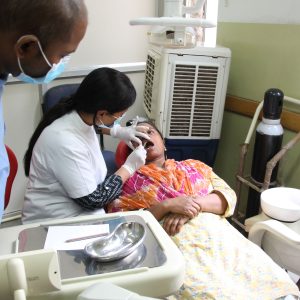
The Hazrat Inayat Khan Health Centre sits in the heart of the Basti. The doctors see patients every day for a small token fee, and children in the education programs are treated free. Specialists visit on set days for eye care, dental, children’s health, elder care and homeopathy.
CLINIC
Good care, close to home
The Hazrat Inayat Khan Health Centre is also a government TB-DOTS center, working with the Nehru Nagar Chest Clinic. TB patients get their medicine and follow-ups, along with milk, eggs and rations to help them recover.
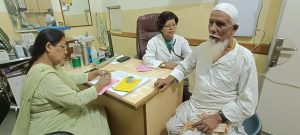
Dr. Lipi Dhar, Medical Director
On caring for the community’s youngest children
4,729
patient visits
119
people in TB care
MOBILE MEDICAL UNITS
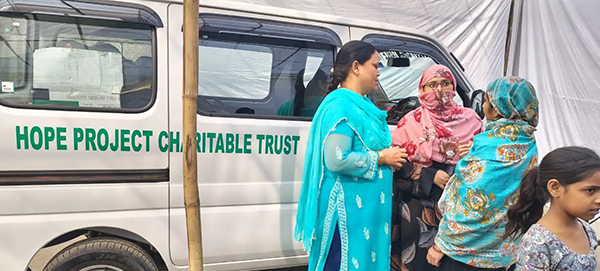
Healthcare that comes to the community
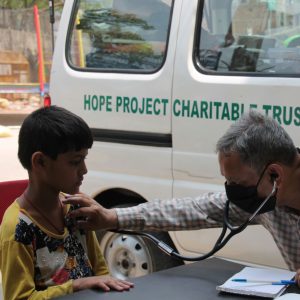
In the Trans-Yamuna neighbourhoods of Delhi, clinics are few and often far from home. The Hope Project’s Mobile Medical Unit brings care to families in Seelampur, Jafrabad, Shastri Park, Khajuri and Kisan Ghat, with a focus on women and young people enrolled in Hope’s programs in the area.
A general physician, pediatrician and gynecologist travel with the van on scheduled visits. They treat common illnesses, help patients manage conditions such as diabetes and high blood pressure, and provide free or subsidised medicine. Patients who need specialist care are referred to government hospitals. The team also runs regular health talks on nutrition, hygiene, maternal health and seasonal illness, along with diagnostic and cancer screening camps.
6,754
patients treated
19
health talks reaching 1,845 people in 2024–25.
SOCIAL WORKERS
The community health workers
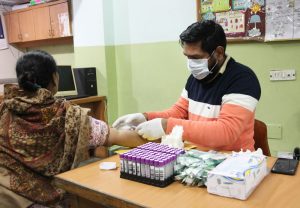
Our community health workers are often the first people a family talks to when something’s wrong. They run health talks in homes and community spaces, on everything from anemia and diabetes to pregnancy care and hygiene. They help families sign up for a Hope health card, and when someone needs hospital care, they make sure that person gets there.
152
health talks reaching 2,837 people
23
new family health cards
How Your Support Helps
We work with people living in poverty, including those who have experienced homelessness, limited access to education, and poor health. Through connection, nutrition, education, healthcare, and opportunity, we help people build the resources and confidence to create more independent lives.
Your generous contribution will help sustain the Hope Project in India.